

China Beads Jewelry Factory 2026: The Ultimate Guide
Selecting the proper China Beads Jewelry Factory involves more than simple price comparison. Jewelry brands, wholesalers, online retailers, and importers need to assess product focus, design assistance, available materials, quality procedures, order adaptability, and export background as well.
This guide describes ways to recognize a capable manufacturer, review product choices, examine samples, handle customization, and lower sourcing risks prior to a bulk purchase.
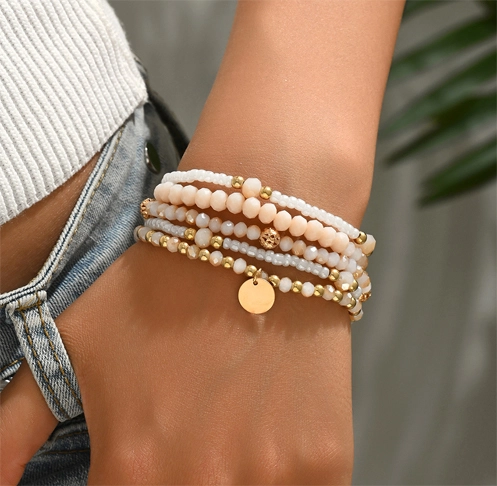
What Makes a High-Quality China Beads Jewelry Factory?
A dependable factory must go beyond basic bead assembly. The factory should recognize how materials, colors, components, construction techniques, packaging, and consistent output influence the end result.
For B2B buyers, quality also covers clear communication, precise samples, delivery scheduling, and the capacity to repeat an approved design throughout an entire production run.
Finished Bead Jewelry Factory vs. Loose Bead Supplier
Loose bead suppliers mainly deliver separate glass beads, acrylic beads, natural stones, imitation pearls, metal findings, and similar parts. Buyers then organize assembly, quality checks, packaging, and transport with additional partners.
A finished jewelry manufacturer oversees a larger part of the production sequence. The manufacturer can transform a design, reference photo, written note, or actual sample into a ready item.
| Loose bead supplier | Individual beads and components | Material supply | DIY sellers and assembly factories |
| Trading company | Products sourced from different factories | Supplier coordination | Buyers seeking broad categories |
| Finished jewelry factory | Completed jewelry and accessories | Sampling, assembly, inspection, and packaging | Brands, wholesalers, and importers |
| OEM or ODM manufacturer | Customized or factory-developed designs | Product development and production | Private-label and custom collections |
The suitable option depends on the buyer’s existing resources. A company equipped with an internal assembly team may choose component suppliers. A retailer that requires ready-to-sell items usually gains more from a finished beads jewelry manufacturer.
Which Buyers Benefit from Direct Factory Cooperation?
Direct factory sourcing works especially well for several groups.
- Fashion jewelry brands creating original collections
- Wholesalers purchasing multiple bead jewelry categories
- Online retailers testing seasonal or trend-focused styles
- Gift companies requiring customized packaging
- Religious product distributors sourcing rosaries or prayer beads
- Importers that need stable repeat-order production
Which Bead Jewelry Products and Customization Options Should Buyers Compare?
Before asking for a quotation, buyers should clearly state the product type, target market, materials, quantity, packaging, and desired delivery date. Precise requirements reduce errors in quotations and allow the factory to decide whether the design fits production needs.
Bead Necklaces, Bracelets, Earrings, and Jewelry Sets
A skilled bead jewelry factory can supply both fashion-oriented and function-based items.
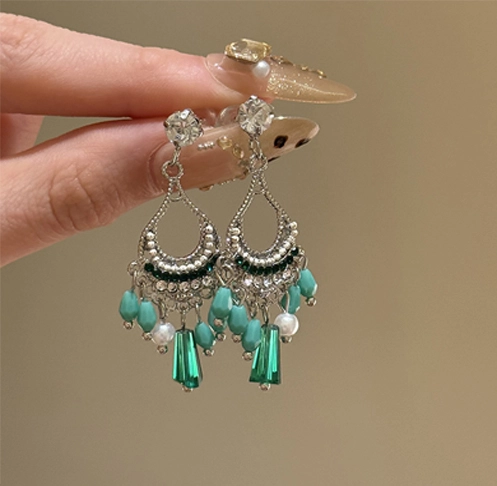
Each category demands different assembly methods. A bracelet needs proper bead size, stringing strength, fit, and comfort. Earrings require careful attention to weight, metal components, balance, and firm connections. A jewelry set must keep matching colors and design details across all pieces.
Religious bead products need extra precision in structure. A traditional Catholic rosary usually follows a set bead sequence with decades, separator beads, a centerpiece, and a crucifix. Tasbih products may contain 33, 66, or 99 beads according to the chosen format. Buyers should verify these details during the design phase instead of depending only on product images.
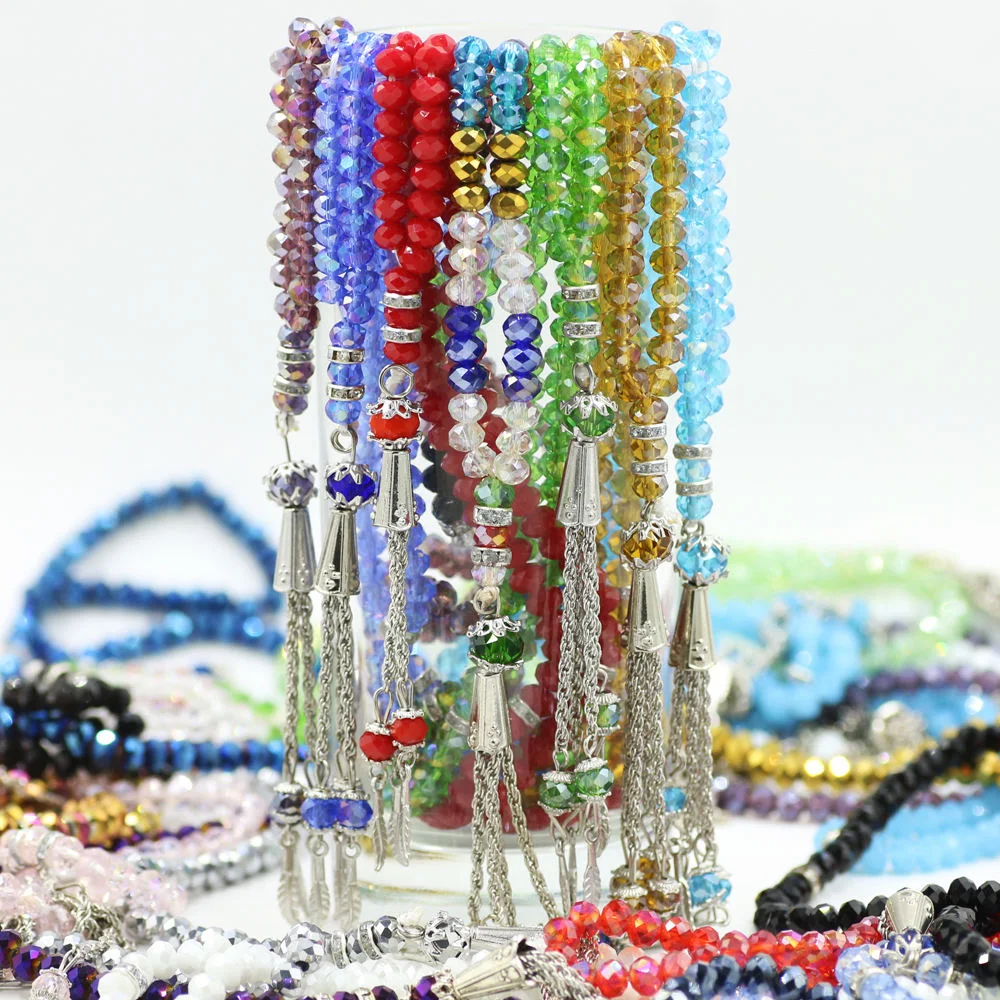
Materials, Colors, Components, and Packaging
Customization extends past simple color changes. Buyers may need to define several elements.
- Glass, acrylic, crystal, natural stone, or imitation pearl materials
- Bead diameter, shape, transparency, and finish
- Single-color or multicolor combinations
- Necklace, bracelet, or chain dimensions
- Metal clasps, hooks, chains, pendants, and connecting parts
- Logo tags, cards, labels, and gift packaging
- Individual OPP packaging or customized retail presentation
Color approval becomes especially critical for multicolor designs. Screen displays, photography lighting, and material batches can change the color appearance. Requesting physical samples or material color cards before production offers buyers a firmer basis for approval.
Packaging discussions should start early. A product created for online retail may need protective individual packaging. A boutique collection may need display cards, branded boxes, or coordinated sets. Packaging decisions can affect production planning, quotation, and shipment volume.
How Can Buyers Evaluate Bead Jewelry Quality and Factory Reliability?
A product may appear attractive in a photograph yet fail during regular use. Buyers should review both visual details and structural construction.
What Defines High-Quality Bead Jewelry?
Important quality indicators include the following points.
- Consistent bead size and color
- Smooth surfaces without obvious chips or sharp edges
- Even bead spacing
- Secure stringing or wire construction.
- Reliable clasps and connecting rings
- Balanced pendants and decorative parts
- Correct product dimensions
- Clean assembly and finishing
- Packaging that prevents tangling or surface damage
For handmade products, minor natural variations can appear. These variations should stay inside an agreed quality range. Buyers should specify which variations remain acceptable and which defects lead to rejection.
How Should Samples and Bulk Orders Be Inspected?
A sample serves as more than a visual guide. The sample sets the production standard for the bulk order.
Buyers should inspect several points.
| Materials | Correct bead and component types |
| Color | Match with the approved sample or color card |
| Dimensions | Length, bead diameter, and accessory size |
| Construction | Secure thread, wire, knots, clasps, and links |
| Appearance | Surface finish, spacing, symmetry, and cleanliness |
| Branding | Correct logo, tag, card, or label |
| Packaging | Correct format, quantity, and protection |
Material color cards and accessory samples can receive confirmation before production begins. During manufacturing, buyers may arrange video inspection or third-party inspection when needed. Finished products should receive final inspection before shipment.
For JINGCAN orders, the documented quality process includes pre-production material confirmation, optional video or third-party inspection, and 100% inspection before shipment.
Illustrative Buyer Scenario
Consider an online retailer that prepares a small summer collection with bracelets, necklaces, and earrings in coordinated colors.
Instead of ordering a large quantity at once, the buyer could follow these steps.
- Send reference images and specify the preferred materials and colors.
- Request samples for the three product categories.
- Check color consistency, dimensions, clasps, and packaging.
- Revise details before approving the final samples.
- Place a mixed-style order after confirming market demand.
This method lets the retailer assess product quality and collection consistency before a larger repeat order.
How Does the OEM and ODM Bead Jewelry Ordering Process Work?
A clear development process helps both the buyer and the factory manage cost, quality, and delivery expectations.
Requirement Submission and Factory Quotation
Buyers can supply AI, PSD, or JPG design files, physical samples, reference images, sketches, or written descriptions. The submission should contain several details.
- Product category
- Material preference
- Bead size and product dimensions
- Color requirements
- Estimated order quantity
- Logo and packaging needs
- Target delivery date
The factory then reviews design complexity, material availability, production feasibility, and component compatibility. For example, bead hole sizes must match the chosen thread, wire, or chain. Metal finishes must remain achievable in the requested color.
Sampling, MOQ, and Order Confirmation
The sample stage confirms whether the suggested design can receive accurate production. According to the established customization process, samples can usually appear within one day after the design and materials receive confirmation.
GO2CJBEADS offers in-stock styles as well as custom production. Sample fees generally range from $10 to $50 per item depending on complexity. Shipping costs are normally paid by the buyer. These fees can be refunded after an order is placed.
The stated MOQ structure is as follows.
- Regular styles: 100 pieces per style
- Complex custom designs: 200 pieces per design
- Mixed-style orders: At least 500 pieces across three to five styles
These options support both focused single-style orders and broader collection testing.
Production, Inspection, and International Shipping
After sample approval, a 30% prepayment is required. The remaining 70% is paid before shipment. The documented production time reaches approximately 7 to 10 days for 500 to 1,000 pieces and 15 to 20 days for orders above 1,000 pieces. This timeframe excludes logistics time.
Before shipment, buyers should confirm the final quantity, packaging, inspection result, carton information, and shipping method. Commercial invoices, packing lists, certificates of origin, and other relevant customs documents can appear when required.
How Can Buyers Reduce Risk When Choosing a Manufacturer?
The lowest quotation does not always equal the lowest sourcing cost. Inaccurate sampling, unstable colors, weak connections, packaging mistakes, or delayed delivery can create extra expenses after the goods arrive.
Before selecting a factory, verify several factors.
- Whether it produces finished jewelry directly
- Whether it has experience with the required materials
- Whether it can develop accurate samples
- Whether the MOQ terms match the project
- Whether quality checks are documented
- Whether custom designs remain confidential
- Whether export documents can be provided
- Whether after-sales responsibilities are clear
Design confidentiality holds special importance for original collections. Buyers should confirm ownership of their design files and request a confidentiality agreement when necessary.
For quality issues reported within 30 days of receipt, we can negotiate replacement or refund solutions after reviewing supporting photographs or videos. Clear evidence and timely communication help both parties resolve problems efficiently.
FAQ
Q: How do I choose a reliable China Beads Jewelry Factory?
A: Verify the supplier is producing finished bead jewelry, not only loose beads. Check their product categories, customization process, sample accuracy, QC, MOQ, production time, exporting experience, confidentiality policy, and customer service after sales.
Q: Can I work with a low MOQ bead jewelry factory in China?
A: Yes. Regular styles provided by JINGCAN can start from 100 pieces per style, while more complex custom designs may require 200 pieces per design. Mixed orders can include three to five styles when the total quantity reaches at least 500 pieces.
Q: How long does custom bead jewelry production take?
A: Sample production can normally be completed within one day after the design and materials are confirmed. Bulk production is approximately 7 to 10 days for 500 to 1,000 pieces and 15 to 20 days for orders above 1,000 pieces, excluding international shipping time.